
 EN
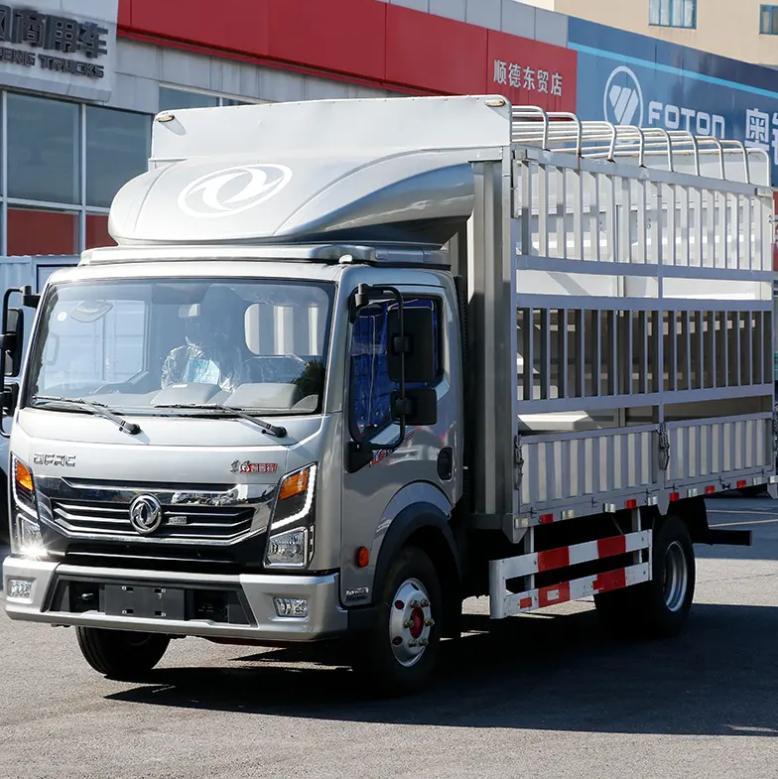
Load-Bearing Capacity Starts With Frame and Axle Ratings
Selecting a truck with high load-bearing capacity is not about chasing the biggest cab or the longest spec sheet. It starts with the frame, the axles, and the ratings that define what the vehicle can legally and safely carry. Gross vehicle weight rating, or GVWR, sets the ceiling. Gross axle weight rating, or GAWR, tells how much each axle can take. A truck can have a high GVWR but still be limited by a weak rear axle or a frame that flexes under torque. Buyers who ignore axle ratings often discover the problem after the first overloaded run, when springs sag and tires wear unevenly.
The U.S. Federal Highway Administration's bridge formula is one reference point for how axle spacing and weight distribution affect legal loading. It is not the only rule, but it explains why adding an axle can sometimes increase payload more than adding engine power.
Payload Ratings Are Not All the Same
Payload is the difference between GVWR and the truck's curb weight. Two trucks with the same GVWR can have very different payloads if one carries a heavier body, larger fuel or battery pack, or more onboard equipment. That is why comparing payload claims without checking curb weight is risky. A truck marketed as a heavy hauler may lose hundreds of kilograms once a reinforced dump body, lift axle, or crane is installed.
Operators should also separate legal payload from mechanical payload. A chassis may physically handle more weight than the law allows on a given road. Running beyond legal limits invites fines, accelerated wear, and insurance problems. The smart approach is to define the required payload first, then work backward to GVWR, axle configuration, and body weight.
Suspension and Tire Choices Carry Real Weight
Suspension design decides how weight is distributed and how the truck behaves when loaded. Leaf springs are simple and durable, but they add weight and ride harshly when empty. Air suspension costs more and needs more maintenance, yet it protects cargo and pavement while allowing load leveling. For high load-bearing work, the choice often depends on route quality and whether the truck returns empty.
Tires matter just as much. Load range, ply rating, and inflation pressure determine how much weight each tire can support. A truck with the right axles but the wrong tires is still unsafe. Tire pressure monitoring and correct inflation are not optional for heavy loads. Underinflation builds heat, and heat kills tires.
| Component | What It Affects | Common Mistake | Practical Check |
|---|---|---|---|
| Frame | Bending and torsion strength | Ignoring rail thickness | Compare section modulus |
| Rear axle | Legal and mechanical load | Overloading single axle | Check GAWR and ratio |
| Suspension | Load distribution, ride | Choosing by price only | Match to route and load |
| Tires | Weight capacity, safety | Running low pressure | Verify load range and ply |
| Brakes | Stopping distance | Assuming engine brake is enough | Check retardation and thermal capacity |
Matching Powertrain and Gearing to Heavy Loads
High load-bearing capacity is not only about structure. The powertrain has to move the load without overheating, slipping, or burning fuel at an unreasonable rate. Torque output, transmission gearing, and rear axle ratio work together. A truck with a high torque engine but a tall final drive may struggle on grades. A truck with a deep axle ratio may climb well but run out of road speed on the highway.
For diesel trucks, engine braking and retarders reduce reliance on friction brakes. For electric trucks, motor torque is available instantly, but continuous heavy loads stress the thermal management system. In both cases, the spec has to match the duty cycle. A truck that spends most of its life on flat, paved roads needs a different setup from one that climbs gravel grades every day.
A Real-World Check on a Mining Haul Road
During a haul road project in southern China, a fleet tested several heavy trucks for moving crushed stone from a pit to a stockyard. The route included a long 9 percent grade and a wet, unpaved section. One candidate had impressive paper payload but a single rear axle and a shallow final drive. It struggled on the grade, and brake temperatures climbed quickly on the descent. Another truck with a heavier frame, tandem rear axles, and a retarder ran slower on the flat but finished the shift with stable temperatures and fewer tire problems.
The lesson was not that bigger is always better. It was that load-bearing capacity is a system. Frame, axles, suspension, tires, gearing, and braking all have to line up. A weak link turns a high rating into a liability.
Procurement Details That Separate Good Trucks From Headaches
Before signing an order, buyers should verify a few practical details:
-
Are the GVWR and GAWR figures certified and documented?
-
Does the body builder provide a weight calculation after installation?
-
Are axle ratios and transmission steps matched to the route?
-
Is there local service support for brakes, axles, and suspension?
-
Are spare parts available without long lead times?
These questions may not appear in a glossy brochure, but they decide whether a truck stays productive. Manufacturing consistency and supply chain discipline also matter. Hansuo, with experience in precision manufacturing and supply chain management, supports commercial vehicle programs by keeping component quality stable and parts availability predictable. For fleets buying high-capacity trucks, that kind of reliability often matters more than a single impressive specification.