
 EN
EN
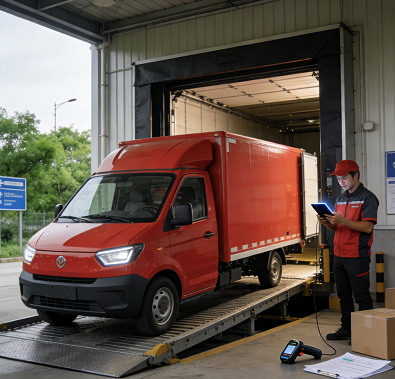
Total Cost of Ownership: Why Electric Trucks Deliver Long-Term Savings
Upfront Investment vs. Lifecycle Cost Advantage
While electric delivery trucks require 15–30% higher initial purchase prices than diesel equivalents, their lifecycle costs fall dramatically over 5–7 years. Industry studies confirm electric models achieve 25% lower total cost of ownership (TCO) through three primary advantages: energy efficiency, reduced maintenance, and slower depreciation.
Key Drivers: Energy Efficiency, Reduced Maintenance, and Lower Depreciation
Electric trucks cut operational expenses through:
- Energy efficiency: Electricity costs 40–60% less per mile than diesel—and with far greater price stability
- Reduced maintenance: Fewer moving parts lower service costs by up to 40% compared to combustion engines
- Slower depreciation: Advances in battery durability extend functional lifespans, supporting stronger residual value
The North American Council for Freight Efficiency validates that electric trucks achieve TCO parity within 3 years for urban delivery fleets, with cumulative savings exceeding $50,000 per vehicle over a decade.
Electric Truck vs. Diesel: A Real-World Cost Comparison for Urban Fleets
Battery Cost Declines and Fuel Price Volatility Shift the Economics
The cost of battery packs has dropped by almost 89% since 2010 according to BloombergNEF's latest report from 2023. This dramatic drop is closing the price difference between electric and diesel trucks that used to favor diesel models so much. Fuel costs for diesel keep bouncing all over the place these days, making it really hard to plan budgets. Take a look at what happened during those recent energy crises when diesel prices swung up and down by nearly 56% in just one year. On the flip side, electricity rates tend to stay pretty steady, which means drivers can count on their per mile costs being about 40% cheaper than what they'd pay for diesel. For city deliveries covering less than 300 miles each trip, electric trucks are becoming serious contenders. And as batteries last longer, companies are seeing their investment pay off faster now, usually within three to five years instead of waiting forever.
TCO Calculator Inputs for Mid-Size Electric Truck Fleets
Accurate total cost of ownership (TCO) projections require these key inputs:
| Cost Factor | Electric Truck Advantage | Diesel Equivalent |
|---|---|---|
| Energy (per mile) | $0.30 (stable pricing) | $0.50 (volatile pricing) |
| Annual Maintenance | $18k–$25k (fewer moving parts) | $32k–$45k |
| Depreciation (5-year) | 35% residual (rising adoption) | 25% residual |
| Regulatory Compliance | $0 emission fines | $7.5k–$12k annually |
Fleet managers should also factor in route density, charging downtime penalties, and available incentives—which can cover 30% of upfront costs in eligible regions. These variables collectively determine when electric models achieve TCO parity, projected for 70% of urban routes by 2027.
Maximizing Savings with Smart Charging Strategies for Electric Trucks
Time-of-Use Rates and Load Shifting: 22–35% Energy Cost Reduction
Getting the most out of fluctuating electricity prices makes all the difference in saving money for vehicle fleets. When companies program their electric trucks to charge during low demand periods, they typically cut down on energy costs somewhere between 22 to 35 percent, as shown in latest benchmarks released by the North American Energy Council last year. The practice of moving loads away from peak times helps dodge those expensive demand charges that often take up around 70% of what businesses pay for electricity each month, while still keeping the trucks ready when needed. Most modern charging systems come equipped with smart software that tweaks charging schedules depending on current grid conditions and where drivers need to be heading next day after day.
Solar + Storage Integration: When On-Site Renewables Improve ROI
Combining solar panels with battery storage unlocks further savings, particularly for depots with daytime charging windows. On-site renewables:
- Eliminate grid dependency during peak rate periods
- Reduce transmission losses by 12–18% (Renewable Energy Journal 2023)
- Qualify for tax incentives improving payback timelines Fleets in high-sunlight regions achieve ROI within 3–5 years when pairing 150kW solar arrays with 500kWh storage systems.
Scaling Operational Readiness: Charging Infrastructure Planning
Getting the charging infrastructure right makes all the difference when it comes to successfully electrifying vehicle fleets. The first step is looking at what sites can actually handle. Electrical systems need to work for today's demands but also leave room for growth down the road. Installing conduits that can scale up later saves money in the long run as the fleet expands. Take a good look at where vehicles go day to day and how long they stay put at each stop. This helps figure out where to place chargers so they don't get in the way of regular operations. Smart load management matters a lot too. By timing charges according to electricity rates, companies can cut their power bills anywhere between 22% and 35%. Plus, this approach keeps stress off the electrical grid during busy periods. Going modular with standard parts makes expansion easier, and adding some renewable energy sources creates protection against unpredictable electricity prices. When everything lines up properly, electric trucks stop being just another problem to solve and become part of the bigger picture strategy. Once charging spots match up with how operations actually work, drivers stop worrying about running out of juice, and businesses see their overall productivity jump.