
 EN
EN
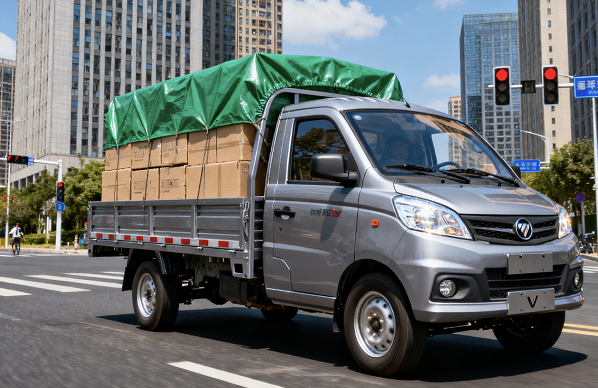
Improved Maneuverability and Urban Accessibility
How Small Truck Dimensions Enhance Navigation in Narrow and Congested Streets
Smaller trucks generally have wheelbases around 3 to 4 meters long and can turn within circles measuring about 5 to 6 meters across, making them far better suited for getting around cities than regular delivery vans. Because they're so much smaller, these vehicles can squeeze through narrow alleys that are only 2.5 meters wide - something we see all over old town areas. Bigger trucks often get stuck there and need to take detours, causing roughly 43% more delays according to research from the Urban Freight Institute back in 2023. The time savings really add up too. Drivers using these nimble trucks typically finish their city routes 18 to 22 minutes faster than those operating medium duty trucks, which makes a big difference when trying to meet tight delivery schedules.
Reduced Contribution to Traffic Congestion and Improved Access to Restricted Zones
Small trucks take up around 32 percent less room on roads compared to regular sized ones, which helps clear those annoying rush hour traffic jams we all hate so much. Take Barcelona as an example city where they swapped out about twenty percent of their delivery trucks for smaller versions. What happened? Well, folks noticed that traffic backups in business districts dropped by roughly fifteen percent during busy times. These little trucks weigh under 3.5 tons, so they can actually get into places where bigger rigs are banned from entering. That means drivers don't have to circle blocks looking for alternative routes. And guess what? When companies use these compact models, deliveries go through on the first try almost nine out of ten times instead of having to come back later.
Case Study: Routing Efficiency of Small Trucks in European City Centers
An Amsterdam pilot lasting twelve months tested 50 electric small trucks and found they averaged around 19.2 km/h, which is roughly 28% quicker than the 15 km/h speed seen with bigger trucks navigating through the city's canal district. According to last year's Urban Logistics Review report, drivers managed to make about 14.3 stops each hour compared to just over nine stops when driving regular sized trucks. Pretty impressive stuff. What really stands out though is how much better behaved these smaller electric trucks were in terms of parking rules. There were 41% fewer parking tickets issued overall, and during loading times there was a massive drop in double parking incidents by nearly two thirds. Makes sense since smaller vehicles take up less space on narrow streets anyway.
Lower Operational Costs and Energy Efficiency
Fuel consumption comparison: small trucks vs. medium-duty trucks in urban routes
Small trucks consume 23% less fuel per kilometer than medium-duty vehicles on urban routes, thanks to lighter weight and smaller engines that minimize idling losses at frequent traffic stops—a key advantage in cities averaging over 50 stops daily.
Lifecycle cost savings in maintenance, insurance, and vehicle depreciation
Small trucks tend to cost around 18 percent less for annual maintenance because they have simpler drivetrains and parts that are easier to find and replace. Looking at the big picture over seven years makes a real difference too when it comes to insurance expenses. The average insurance bill for these smaller vehicles runs about $2,100 per year while bigger trucks typically set operators back closer to $3,400 annually. That adds up pretty fast. Another thing worth mentioning is depreciation rates. After just five years on the road, most small trucks still hold onto roughly 53% of what they originally cost, whereas medium duty trucks usually lose value much faster, only keeping about 34% of their initial price tag. For businesses watching their bottom line, this can make all the difference between staying profitable or eating into profits every time they need new equipment.
Urban freight-mobility energy productivity (UF-MEP) gains with compact fleets
Replacing three medium trucks with five small trucks in high-density zones improves UF-MEP—measuring ton-miles per kilowatt-hour—by 29%. This efficiency stems from reduced empty running and better route optimization enabled by narrower vehicle profiles.
Cost-efficient operations in high-density delivery zones
In areas exceeding 15 deliveries per square kilometer, small trucks achieve 40% more daily stops due to easier parking and faster load/unload cycles. A 2023 Tokyo pilot demonstrated 22% lower per-stop delivery costs within 300-meter delivery clusters.
Higher Delivery Performance and Last-Mile Efficiency
Key performance metrics: on-time delivery rates and stop density improvements
Logistics providers report 18% higher on-time delivery rates using small trucks, attributable to shorter dwell times and the ability to bypass traffic choke points. The compact footprint supports 22% greater stop density per route, enabling drivers to service more locations within tight time windows without compromising schedule adherence.
Data insight: 30% faster last-mile throughput in tested cities using small trucks
Cities piloting small truck fleets achieved 30% faster last-mile throughput, according to a 2024 Urban Logistics Analysis. This gain results from quicker turnaround at congested sites and optimized routing around infrastructure that restricts larger vehicles.
Support for time-sensitive urban logistics and just-in-time deliveries
Compact trucks are essential for meeting modern fulfillment demands, as 68% of urban shippers now require sub-4-hour delivery. They enable reliable just-in-time supply chains for restaurants and pharmaceuticals, while industry findings show their use reduces perishable goods handling errors by 40% through more consistent delivery cadences.
Enabling frequent, flexible delivery schedules in dynamic urban environments
Operators using small truck fleets report 35% greater scheduling flexibility. This adaptability supports real-time rerouting around road closures or parking constraints, maintaining delivery frequency even amid disruptions—an advantage especially valuable for e-commerce providers accommodating customer rescheduling requests in dense metro areas.
Integration with Modern Urban Logistics Infrastructure
Role of Small Trucks in Scaling E-commerce Last-Mile Delivery Networks
Small trucks align seamlessly with evolving urban logistics infrastructure. Their compatibility with freight corridors enables efficient service in high-density e-commerce zones without reliance on large loading bays or extensive parking. This operational flexibility supports same-day networks, particularly as 68% of city consumers now expect sub-24-hour fulfillment (2024 urban logistics study).
Synergy with Micro-Fulfillment Centers and Dark Stores in City Cores
Compact vehicles integrate directly with hyperlocal hubs such as micro-fulfillment centers. Unlike traditional warehouses requiring heavy-duty access, these urban nodes rely on small trucks for frequent, agile replenishment—reducing storage needs by 40% while maintaining 99% inventory accuracy in trials. This relay system shortens mid-mile legs and strengthens final-mile responsiveness.
Impact of Rising E-commerce Demand on Compact Vehicle Adoption
With urban e-commerce parcel volume growing 23% annually (Statista 2024), small truck deployment across European metro areas has risen 37% since 2022. This shift reflects carriers’ response to evolving parcel trends, where 82% of deliveries now involve packages under 30kg.
Balancing Delivery Frequency with Urban Curb Space Management Challenges
Municipalities prioritize small trucks in dynamic curb allocation systems due to their 19% faster loading/unloading times. This efficiency is critical in markets like central Tokyo, where available commercial curb space declined 14% between 2020 and 2023 despite a 31% increase in delivery demand.
Environmental Benefits and Regulatory Compliance
Reduced Emissions and Compliance with Low-Emission Zone (LEZ) Regulations
According to the Urban Freight Efficiency Report from 2023, small trucks actually produce around 28 percent fewer nitrogen oxides (NOx) emissions and about 19 percent less particulate matter when operating in urban environments compared to their medium duty counterparts. This makes them much better suited for navigating through Europe's extensive network of low emission zones which now number over 320 across the continent. Because they're smaller, these trucks don't run into the same penalty issues as larger vehicles do in restricted areas such as London's Ultra Low Emission Zone (ULEZ). Looking at actual numbers from last year shows this advantage clearly: approximately 87% of small truck operators managed to keep running without any restrictions throughout all of 2023, while only about half (roughly 54%) of regular sized vehicle operators could say the same thing.
Incentives for Adopting Electric Small Trucks in Metropolitan Areas
Fourteen major cities offer tax rebates averaging €6,200 per electric small truck, spurring adoption—Amsterdam’s 2024 Clean Logistics Program saw registrations rise 210% year-over-year. Operators benefit from 40% lower energy costs versus diesel models and save up to €2,800 annually through exemptions from urban road pricing in cities like Milan and Stuttgart.
Support for Municipal Sustainability Goals and Green Logistics Initiatives
Electric small trucks are central to Paris’ 2024 Zero-Emission Delivery Charter, which cut final-mile carbon emissions by 18% during its pilot phase. By aligning with municipal Scope 3 targets, companies can qualify for ECO2 logistics certification—increasingly demanded by 63% of urban consumers in retail surveys.
Frequently Asked Questions
Why are smaller trucks better suited for cities?
Smaller trucks are better suited for cities due to their compact size, which allows them to navigate narrow streets and congested areas more easily than larger vehicles, saving time and avoiding detours.
How do small trucks impact traffic congestion?
Small trucks take up less road space, reducing traffic congestion. In cities like Barcelona, replacing larger trucks with smaller ones has significantly decreased traffic backups during busy times.
Are small trucks more cost-effective to operate?
Yes, small trucks offer lower operational costs due to decreased fuel consumption, maintenance, and insurance costs. They also hold their value better over time compared to medium-duty trucks.
Do small trucks support urban environmental regulations?
Small trucks emit fewer emissions, making them ideal for operating in low-emission zones. Their compliance with environmental regulations helps them avoid penalties in restricted areas.
What incentives are available for electric small trucks?
Various cities offer tax rebates and reduced energy costs for electric small trucks. These incentives promote adoption and provide financial benefits for operators.
Table of Contents
- Improved Maneuverability and Urban Accessibility
- Lower Operational Costs and Energy Efficiency
-
Higher Delivery Performance and Last-Mile Efficiency
- Key performance metrics: on-time delivery rates and stop density improvements
- Data insight: 30% faster last-mile throughput in tested cities using small trucks
- Support for time-sensitive urban logistics and just-in-time deliveries
- Enabling frequent, flexible delivery schedules in dynamic urban environments
- Integration with Modern Urban Logistics Infrastructure
- Role of Small Trucks in Scaling E-commerce Last-Mile Delivery Networks
- Synergy with Micro-Fulfillment Centers and Dark Stores in City Cores
- Impact of Rising E-commerce Demand on Compact Vehicle Adoption
- Balancing Delivery Frequency with Urban Curb Space Management Challenges
- Environmental Benefits and Regulatory Compliance
- Frequently Asked Questions