
 EN
EN
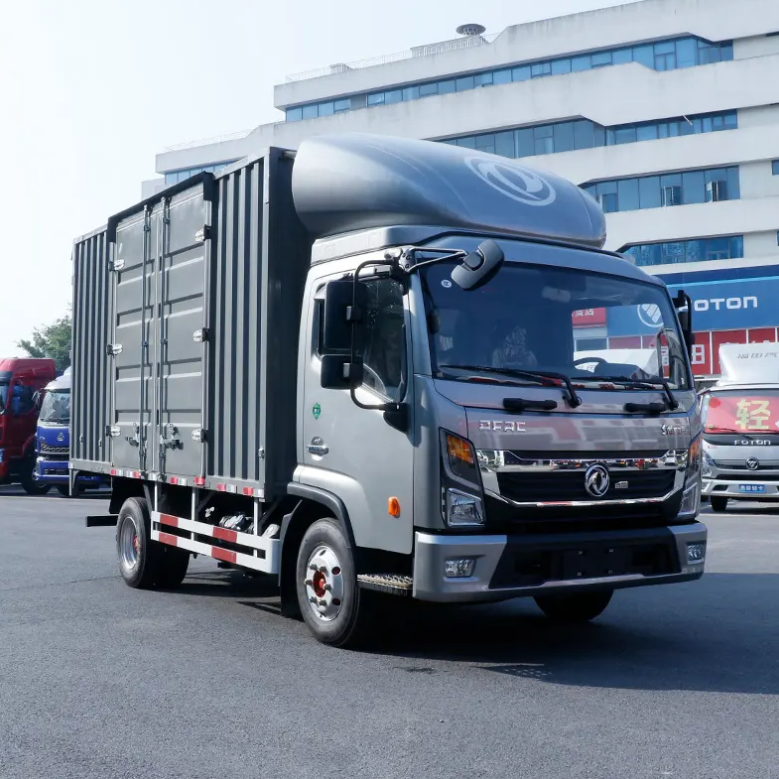
Assessing Payload Needs and GVWR Compliance for Box Trucks for Sale
Understanding GVWR vs. Payload Capacity: Legal, Safety, and Operational Implications
Gross Vehicle Weight Rating (GVWR) is the maximum allowable weight of a fully loaded box truck—including cargo, passengers, fuel, and all installed equipment—as certified by the manufacturer. Payload capacity is derived by subtracting the vehicle’s curb weight (empty weight with standard fluids and no cargo) from its GVWR. For example, a truck with a 16,000 lb GVWR and a 6,000 lb curb weight offers a 10,000 lb payload capacity.
Exceeding GVWR compromises structural integrity, increases braking distances by up to 50%, and exposes operators to federal fines exceeding $15,000 per violation. Under FMCSA regulations, box trucks with a GVWR over 10,001 lbs require a DOT number, annual inspections, and adherence to Hours of Service rules. A 2023 industry survey found that 18% of medium-duty fleet operators unintentionally overload their vehicles—underscoring how easily compliance can slip without disciplined load planning and real-time weight awareness.
Matching Real-World Use Cases — Parcel Delivery, Moving Services, and Last-Mile Logistics
Payload selection must reflect mission-critical operational demands—not just theoretical capacity. Parcel delivery fleets typically rely on light-duty box trucks (under 10,000 lbs GVWR) optimized for frequent stops, tight turning radii, and payloads under 6,000 lbs. Moving services require greater carrying power and versatility, commonly using medium-duty models in the 14,000–26,000 lbs GVWR range—offering robust payload capacity while retaining access to residential streets and standard garages. Last-mile logistics prioritizes urban agility and driver efficiency, often favoring 12–16 ft box lengths with payloads under 8,000 lbs and dock-height compatibility.
Volume and payload benchmarks for common configurations:
| Box Length | Payload Capacity | Volume Capacity | Ideal Use Case |
|---|---|---|---|
| 16 ft | 8,000–10,000 lbs | 630 cu ft | Local Moving Services |
| 20 ft | 10,000–12,000 lbs | 810 cu ft | Regional Distribution |
| 26 ft | Up to 26,000 lbs | 1,400+ cu ft | High-Volume Freight |
Maintaining a 10% payload buffer—e.g., loading only 9,000 lbs into a 10,000-lb-rated truck—accounts for variable cargo density, incidental equipment, and scale calibration variance, helping avoid inadvertent overloading penalties.
Evaluating Chassis, Powertrain, and Fuel Options for Box Trucks for Sale
Gas, Diesel, and Electric: TCO, Range, Uptime, and Infrastructure Readiness
Powertrain choice significantly shapes total cost of ownership (TCO), route flexibility, and daily uptime. Gasoline engines remain viable for light-duty, low-mileage operations—offering lower acquisition costs, broader service network access, and simplified maintenance. Diesel delivers superior torque, extended service intervals, and 20–30% better fuel economy over long-haul or high-frequency routes, though it carries higher upfront investment and stricter emissions compliance obligations (e.g., DEF handling, DPF regeneration).
Electric powertrains eliminate tailpipe emissions and reduce maintenance by up to 40%, with minimal moving parts and regenerative braking benefits. While current battery-electric models are best suited for predictable, depot-based routes under 150 miles, rapid charging infrastructure and falling battery costs are accelerating adoption—especially where state incentives (like California’s HVIP) offset capital expense. Fleet managers should evaluate duty cycles first: daily mileage, stop frequency, elevation changes, and available refueling/charging infrastructure—not just fuel price differentials—to determine which powertrain delivers optimal lifecycle value and regulatory alignment.
Optimizing Body Dimensions, Door Configurations, and Interior Layouts
12ft to 26ft Box Trucks for Sale: Volume Efficiency, Urban Maneuverability, and Loading Workflow
Box length directly influences both cargo utility and operational feasibility. A 12–14 ft model provides ~400–500 cubic feet of volume and excels in dense urban environments—navigating narrow alleys, parking in standard curbside spaces, and integrating seamlessly with sidewalk-level deliveries. At the other end, 26 ft box trucks maximize freight density (1,400+ cu ft) for line-haul or cross-dock applications but require careful attention to height restrictions, turning radius limitations, and local permitting for oversized loads.
Door configuration is equally strategic: roll-up rear doors streamline palletized loading at distribution centers; side-entry doors support multi-stop parcel drops without repositioning the vehicle; and optional liftgates extend accessibility to locations without docks. Interior layouts should incorporate E-track rails, adjustable shelving, or integrated racking systems—not just for cargo security, but to reduce load-shift incidents and accelerate unloading. According to 2023 logistics efficiency benchmarks, fleets reporting door placement aligned with standard dock heights and workflow sequencing achieved 22% faster terminal turnaround times.
Critical Upfit Considerations and Regulatory Alignment for Box Trucks for Sale
Upfitting must begin—and end—with GVWR integrity. Adding bodies, liftgates, refrigeration units, or signage increases tare weight; if unaccounted for, these modifications can push the final equipped weight past the original GVWR, triggering reclassification, new registration requirements, and non-compliance exposure. Always verify that the completed upfit remains within certified weight limits—and confirm whether the chassis manufacturer permits the intended body type and mounting method.
Beyond weight, upfits must align with operator requirements: CDL licensing thresholds (e.g., GVWR ≥ 26,001 lbs mandates Class B CDL), medical certification, and mandated safety equipment like reflective tape, lighting, and conspicuity markings. E-commerce fulfillment partners frequently specify dock-height 26 ft boxes with liftgates and integrated pallet jacks; airport cartage may require TSA clearance and secure cargo containment; refrigerated (reefer) applications demand EPA-certified insulation and temperature monitoring integration—all subject to DOT and state-level enforcement.
Prioritize upfit partners who provide full-weight documentation, engineering sign-off, and post-upfit certification. This ensures every box truck for sale you acquire meets functional, legal, and safety standards from day one—without retroactive redesign or costly rework.
FAQ
What is GVWR?
GVWR stands for Gross Vehicle Weight Rating, which is the maximum weight a fully loaded vehicle can safely carry, including the truck's weight, cargo, fuel, and passengers.
How is payload capacity calculated?
Payload capacity is determined by subtracting the vehicle's curb weight from its GVWR.
What happens if GVWR is exceeded?
Exceeding the GVWR can compromise structural integrity, increase braking distances, and result in federal fines exceeding $15,000 per violation.
Which powertrain is best for box trucks?
The ideal powertrain depends on operational needs: gasoline for light-duty tasks, diesel for heavy-duty and long-haul routes, and electric for predictable, short-range depot-based operations.
What should be considered when upfitting a box truck?
Upfits must not exceed GVWR and should comply with CDL, safety equipment, and functional requirements. Always ensure engineering sign-off and weight documentation.