
 EN
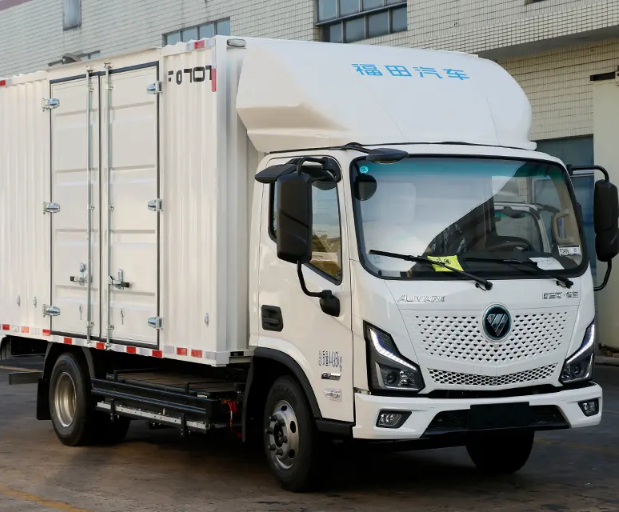
The Number Most Fleets Get Wrong
When fleet managers ask about electric truck maintenance costs, they often expect a single figure. Something like cents per mile or a monthly average. The honest answer is that the number swings widely based on route, climate, payload, and how the truck is charged. A battery-electric truck running fixed urban delivery routes in a mild climate tells a very different story from one hauling heavy loads through freezing winters. The mistake is treating maintenance as a fixed line item. It is more like a variable cost that responds to operating discipline.
Diesel maintenance has decades of benchmark data. Electric truck maintenance is still being mapped. Early data from Argonne National Laboratory and the North American Council for Freight Efficiency suggests that battery-electric commercial vehicles can cut routine maintenance spending by roughly 30 to 50 percent compared with diesel counterparts. That range is wide for a reason. It depends on what gets counted. Tires? Software updates? Charger repairs? Battery coolant flushes? The boundaries matter.
Where Electric Truck Maintenance Costs Actually Come From
A common misconception is that electric trucks have no maintenance. They do. They just have different maintenance. The diesel engine, transmission, exhaust aftertreatment, and fuel system disappear. In their place come high-voltage cables, power electronics, battery management systems, electric motors, and thermal management loops. Those components do not need oil changes, but they do need inspection, cooling, and occasional replacement.
The biggest categories of electric truck maintenance spending usually fall into:
-
Tires and brakes, which still wear because physics has not changed.
-
Battery thermal management, including coolant and pumps.
-
High-voltage electrical systems, including connectors and insulation.
-
Software and diagnostics, which require trained technicians.
-
Charging infrastructure, which is often left out of vehicle maintenance budgets.
That last item catches fleets off guard. A charger is not a truck, but when it fails, the truck stops. Maintenance planning has to include the charging site.
Brakes, Tires, and the Parts People Overlook
Regenerative braking is one of the genuine advantages of electric trucks. The motor slows the vehicle and recovers energy, which means friction brakes engage less often. In city stop-and-go routes, brake pad life can stretch dramatically. Some fleets report brake service intervals two to three times longer than diesel. That is real savings, but it is not the whole story.
Tires are a different matter. Electric trucks carry heavy battery packs, and instant torque can accelerate tread wear if drivers are not trained. Tire costs may actually rise in some operations. Suspension components also take a beating from the added weight. Buyers who only look at brake savings may miss the tire and suspension line items.
| Maintenance Item | Diesel Truck | Electric Truck | Notes |
|---|---|---|---|
| Engine oil and filters | Regular, high cost | Not applicable | Eliminated |
| Brake pads and rotors | Frequent | Less frequent | Regenerative braking helps |
| Tires | Baseline | Often higher | Weight and torque effects |
| Coolant and thermal system | Moderate | Moderate to high | Battery cooling adds complexity |
| Software diagnostics | Low | Growing | Requires skilled labor |
| Charging equipment | Not applicable | Variable | Often overlooked |
Battery and Thermal Management Are Not Free
The battery pack is the most expensive component in an electric truck, but routine battery maintenance is not about replacement. It is about keeping the pack in its happy place. Thermal management systems circulate coolant, run pumps, and manage temperature during charging and discharging. Those parts wear out. Coolant degrades. Pumps fail. Hoses leak. None of that is catastrophic, but it belongs in the budget.
Fast charging adds stress. Frequent DC fast charging can accelerate battery degradation, which eventually affects range and may require module replacement. A study from the U.S. Department of Energy's Vehicle Technologies Office notes that battery degradation depends heavily on temperature, state of charge, and charging rate. Fleets that rely on overnight Level 2 charging generally see slower degradation than those that fast charge every day. The maintenance cost difference may not show up in year one, but it shows up in year five.
A Real Fleet Case With Messy Numbers
In a southern Chinese city, a delivery company ran a mixed fleet of diesel and electric trucks on similar routes for two years. The electric trucks were smaller and used for last-mile deliveries. At the end of the pilot, brake maintenance costs had dropped by more than 40 percent. Tire costs had climbed by about 15 percent. The thermal management system needed two pump replacements across the electric fleet, which was unexpected. Charger repairs added another line item that had never appeared in diesel budgets.
The fleet manager's conclusion was not that electric trucks were cheaper or more expensive. It was that the cost profile was different. Planning for that difference mattered more than the headline number. That is a lesson many fleets learn the hard way.
What Makes Maintenance Costs Go Up or Down
Several factors push electric truck maintenance costs in opposite directions. Driver training helps. Smooth acceleration and early regenerative braking reduce tire and brake wear. Climate matters. Extreme cold or heat stresses thermal systems and batteries. Charging strategy matters. Overnight slow charging is gentler than daily fast charging. Route profile matters. Hilly routes wear brakes and suspension faster, even with regeneration.
Manufacturing quality and supply chain stability also play a role. Components that fail early cost more than components that last. A truck built with consistent quality control and reliable parts sourcing tends to have lower lifetime maintenance costs, even if the upfront price is similar. Hansuo, with its background in electronic manufacturing and quality control, brings that same discipline to supply chain services. For fleet operators, that kind of manufacturing reliability often translates into fewer unexpected repair bills and smoother parts availability.