
 EN
EN
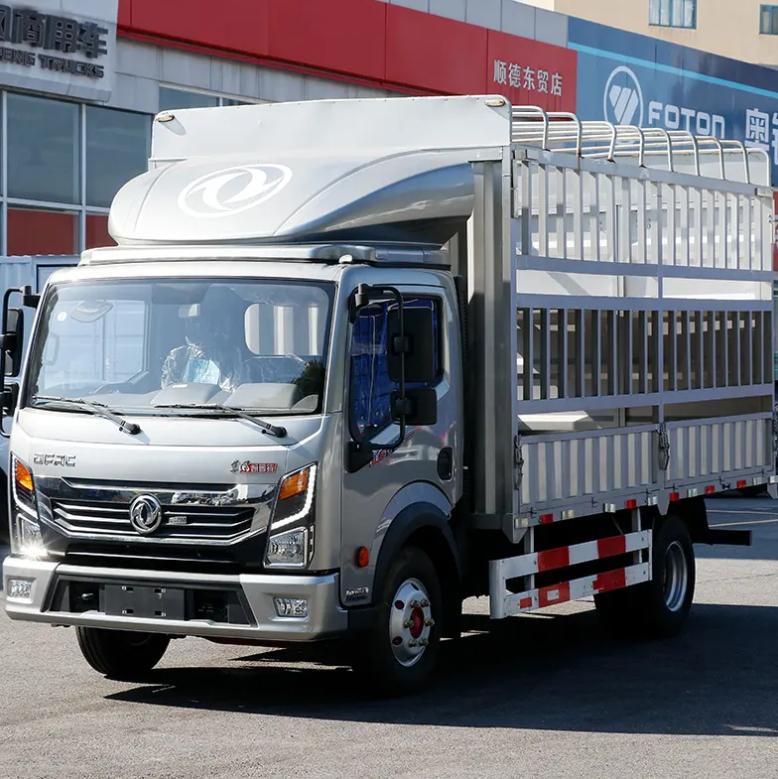
Why Electric Delivery Trucks Excel in Urban Environments
Stop-and-go efficiency and regenerative braking for city traffic cycles
Electric delivery trucks are purpose-built for urban stop-and-go traffic. Unlike diesel engines—which waste kinetic energy as heat during braking—electric motors use regenerative braking to recapture up to 20–30% of that energy and return it to the battery. This not only extends usable range without increasing battery weight but also reduces wear on friction brakes, lowering maintenance costs. Combined with instant torque delivery, electric trucks accelerate smoothly from standstill—eliminating engine lag at traffic lights and cutting average trip times. For routes defined by frequent idling, acceleration, and deceleration, this synergy makes electric powertrains inherently more efficient than internal combustion alternatives.
Low-end torque, quiet operation, and zero tailpipe emissions for pedestrian safety and low-emission zone compliance
Electric motors deliver maximum torque from zero RPM, enabling precise, low-speed maneuvering in narrow streets, tight loading zones, and congested residential areas. Drivers can creep forward silently—without revving or gear-shifting—reducing noise pollution and enabling early-morning or late-night deliveries without community disruption. Critically, zero tailpipe emissions ensure seamless compliance with rapidly expanding low-emission (LEZ) and zero-emission (ZEZ) zones. Cities like London (ULEZ), Paris (ZFE), Berlin (Umweltzone), and Los Angeles (Clean Truck Program) now restrict or charge older diesel vehicles, while electric delivery trucks operate freely—avoiding daily fees, retrofitting, or operational delays. This dual advantage of pedestrian-friendly operation and regulatory readiness solidifies their role in sustainable urban logistics.
Top Light-Duty Electric Delivery Trucks for City Logistics
For fleet operators transitioning to electric, several light-duty models have already demonstrated strong real-world performance in urban delivery. Each balances payload, range, cargo volume, and software integration differently—yet all prioritize the operational realities of dense city environments.
Ford E-Transit and Mercedes eSprinter: payload, cargo volume, and urban maneuverability compared
The Ford E-Transit delivers up to 4,250 lbs of payload and 487 cubic feet of cargo volume (high-roof configuration), with a curb-to-curb turning radius of ~42 feet—ideal for navigating tight alleyways and historic city districts. Its wheelbase and steering geometry support confident U-turns on one-way streets. The Mercedes eSprinter offers slightly less payload (~3,860 lbs) but matches the E-Transit in cargo capacity (up to 473 cu. ft.). Its optional rear-wheel drive and lower cargo floor height improve ergonomics where dock-level loading isn’t available. Both models feature 60–80 kWh battery packs and deliver 100–150 miles of real-world range—sufficient for full-day urban routes with minimal mid-shift charging needs.
Rivian EDV and BrightDrop EV600: integrated software and last-mile delivery optimization
While Ford and Mercedes emphasize hardware capabilities, the Rivian EDV and BrightDrop EV600 distinguish themselves through software-native design. The Rivian EDV was co-developed with a major logistics partner and embeds dynamic route optimization directly into its infotainment system—automatically rerouting around traffic congestion or LEZ/ZEZ restrictions. Its 135 kWh battery supports 150+ miles of range, and features like a low beltline and wide side doors speed up package handling. The BrightDrop EV600 builds on this with a 400-volt architecture enabling up to 120 kW DC fast charging, a class-leading 600 cubic feet of cargo volume, and an integrated fleet management platform that unifies telematics, pre-trip inspections, and battery preconditioning. Pilots with large fleets show these capabilities can increase stops-per-shift by 20% or more—proving that intelligent software is now as critical as battery capacity in urban delivery.
Real-World Range, Payload, and Charging for Daily City Delivery Routes
How <150 miles/day range meets >95% of urban delivery demands — validated by UPS, Amazon, and FedEx pilot data
Urban delivery routes rarely exceed 150 miles per day—and data from major logistics pilots confirm that electric trucks with 100–160 miles of real-world range satisfy over 95% of city delivery requirements. Light-duty electric vans typically achieve 108–230 miles on a full charge, comfortably covering the industry-average urban fleet distance of ~100 miles per day. Since most city-based fleets operate hub-and-spoke models—returning to a central depot each night—overnight Level 2 charging (4–10 hours) fully replenishes batteries without disrupting operations. Importantly, payload has minimal impact on range for last-mile duty cycles: cargo weight decreases throughout the shift, offsetting the initial battery load penalty. This alignment between vehicle capability and actual urban operating patterns eliminates range anxiety and confirms electric trucks as operationally viable—and increasingly cost-advantaged—across metropolitan networks.
Safety, Infrastructure Fit, and Operational Readiness in Dense Cities
Operating delivery trucks in dense urban environments demands precision, awareness, and responsiveness—especially near curbs, cyclists, and high-pedestrian corridors. Modern electric delivery trucks integrate advanced driver-assistance systems (ADAS) designed specifically for these challenges.
Adaptive driver-assistance systems for narrow streets, curb proximity, and high-pedestrian zones
ADAS features—including 360-degree camera systems, ultrasonic sensors, automated emergency braking, and pedestrian detection—enhance situational awareness in complex city settings. Curb proximity alerts help prevent side-swipe incidents during parallel parking or alley navigation, while real-time pedestrian tracking reduces collision risk in crowded zones. These systems also assist in low-speed maneuvers, minimizing curb damage and associated repair costs. When paired with live traffic and road-condition data, ADAS can dynamically adjust speed and braking response—improving consistency and predictability in high-density corridors. For fleet managers, this translates to fewer accidents, lower insurance premiums, reduced downtime, and measurable gains in both safety performance and public perception.