
 EN
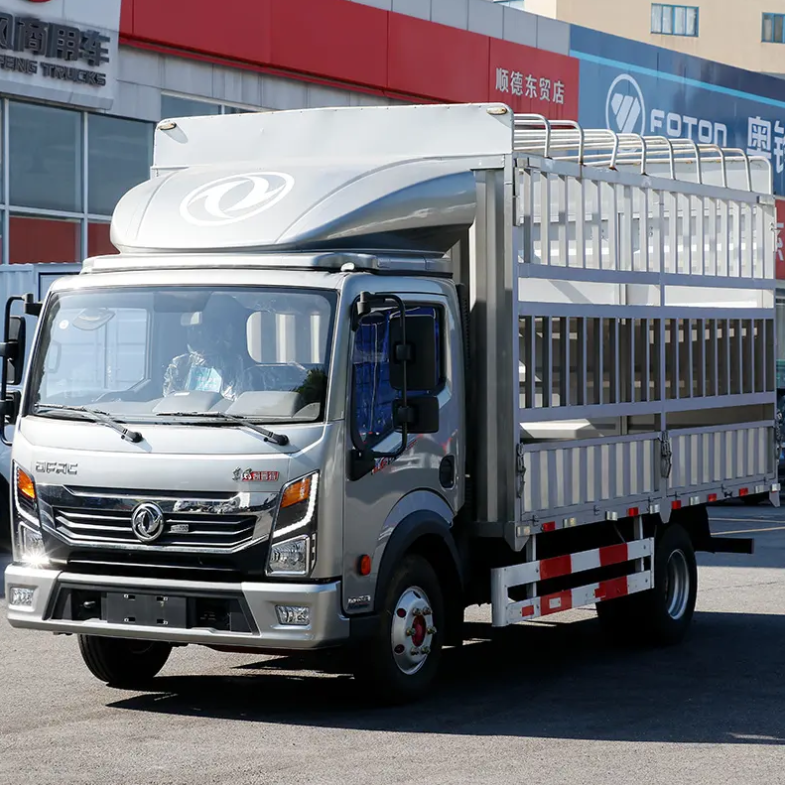
Heavy-Duty Starts With Weight Class, Not Cab Size
Ask ten people what makes a truck heavy-duty and most will point at the size of the cab or the number of wheels. That is not how regulators or engineers see it. Heavy-duty classification begins with gross vehicle weight rating, or GVWR. In the United States, the Federal Highway Administration puts Class 7 trucks between 26,001 and 33,000 pounds, while Class 8 covers anything above 33,000 pounds. In Europe and China, similar thresholds exist, though expressed in tonnes and axle limits. A truck that fits heavy cargo transport has to be legal first and impressive second. Overloading a medium-duty chassis to save money usually ends with fines, brake problems, and cracked frames.
Tractor-Trailers Still Dominate Long-Haul Freight
For moving 20 to 40 tons across long distances, the tractor-trailer remains the default. A Class 8 tractor paired with a dry van, flatbed, or refrigerated trailer offers the best balance of payload, fuel or battery capacity, and highway stability. The articulation between tractor and trailer lets the combination turn tighter than a rigid truck of similar length, which matters at loading docks and urban edges. That same articulation demands skill. Jackknife risk, fifth-wheel maintenance, and trailer brake synchronization are real operational costs. Fleets that run high mileage generally accept those costs because the payload per driver hour is hard to beat.
Rigid Trucks Make Sense for Regional and Construction Work
Not every heavy cargo job involves a 1,000-mile run. Regional distribution, construction material delivery, and waste transfer often favor rigid trucks. An 8x4 rigid chassis with a dump body or heavy box can carry serious weight without a trailer. The advantages are maneuverability, simpler coupling, and fewer points of failure. The trade-off is lower total payload and higher cost per ton on long routes. In cities with narrow streets and tight job sites, a rigid heavy truck often finishes the day faster than a tractor-trailer. In open highway work, the trailer combination usually wins.
Axle Configuration Changes Everything on Bad Roads
Axle count and drive configuration decide whether a heavy truck survives a quarry, a muddy construction site, or a mountain pass. A 6x4 tractor sends power to two rear axles, which improves traction under load. An 8x4 rigid spreads weight across four axles, reducing pavement stress and improving stability. On steep grades, engine brakes and retarders matter as much as horsepower. A case from a mining transfer project in southern China illustrates the point. The team started with 6x4 tractor-trailers for ore hauling on a wet, graded road. Traction was acceptable, but brake fade on the descent became a weekly problem. Switching to 8x4 rigid dump trucks with retarders cut brake-related downtime sharply. The fix was not more power. It was better weight distribution and better braking strategy.
| Configuration | Typical GVWR | Common Use | Strength | Limitation |
|---|---|---|---|---|
| Class 8 6x4 tractor-trailer | Above 33,000 lb | Long-haul, port, regional | High payload, flexible trailers | Needs skill, more maintenance points |
| 8x4 rigid dump | 40 tonnes and up | Quarry, construction, waste | Traction, stability, no trailer | Poor long-haul efficiency |
| 6x4 heavy box truck | 26,000 to 33,000 lb | Regional delivery, equipment | Simple, maneuverable | Lower payload ceiling |
| Heavy-haul tractor with lowboy | Above 33,000 lb | Oversize machinery | Moves exceptional loads | Permits, escorts, route planning |
Matching Body Style to Cargo Protects the Bottom Line
The chassis gets the attention, but the body decides whether cargo arrives intact. Flatbeds suit steel, lumber, and containers. Curtain-siders speed up side loading. Refrigerated bodies add weight and drain power, which matters for electric and diesel alike. Dump bodies need reinforced frames and hoist systems that match the material density. A truck spec that looks cheap on the quote sheet can become expensive when the body fails early or when loading takes twice as long. Buyers should calculate cost per delivered ton, not just cost per truck.
Specs, Service Networks, and Supply Chain Reality
Even the right model becomes a liability if parts take weeks to arrive or technicians lack diagnostic tools. Heavy-duty trucks are capital assets with long duty cycles. Service network coverage, parts availability, and diagnostic software access belong in the purchase decision. Industry data from the American Transportation Research Institute consistently shows that repair and maintenance costs rise with vehicle age and mileage, and downtime costs can exceed the repair bill itself. A fleet buying ten trucks should ask how many of those trucks can be back on the road within 24 hours after a failure. That question separates a good deal from a risky one.
For manufacturers and suppliers, quality control at the component level feeds directly into fleet uptime. Hansuo, with a background in precision manufacturing and supply chain management, supports commercial vehicle programs by keeping parts consistent and availability predictable. That kind of manufacturing discipline does not show up in a brochure, but fleet managers feel it every month.
Table of Contents
- Heavy-Duty Starts With Weight Class, Not Cab Size
- Tractor-Trailers Still Dominate Long-Haul Freight
- Rigid Trucks Make Sense for Regional and Construction Work
- Axle Configuration Changes Everything on Bad Roads
- Matching Body Style to Cargo Protects the Bottom Line
- Specs, Service Networks, and Supply Chain Reality