
 EN
EN
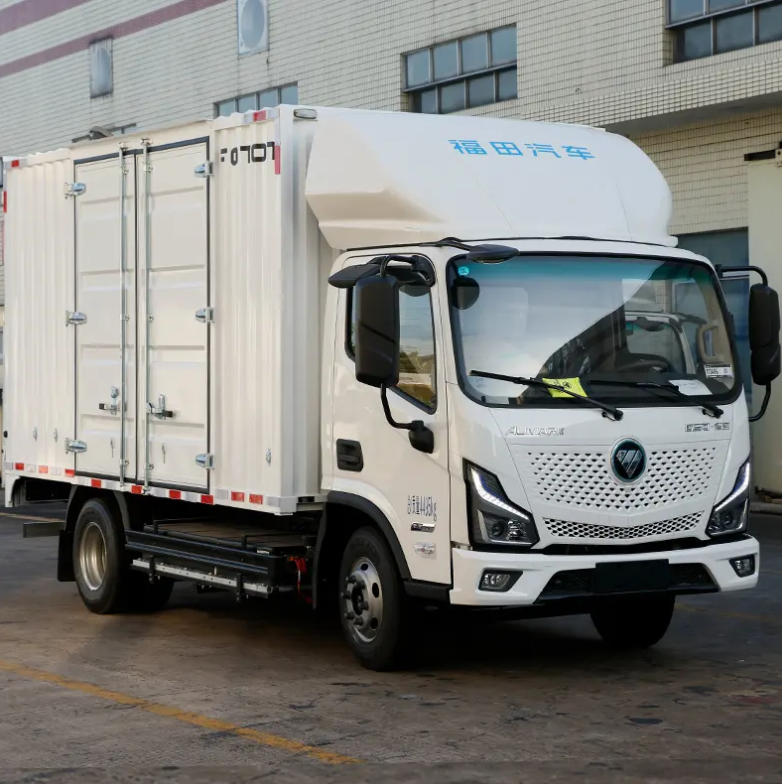
Defining Durability in a Stop and Go World
Reliability in urban distribution is not a feature to be read off a glossy brochure. It is a brutal, cumulative test of endurance that starts the moment the key is turned on a Monday morning. A truck engaged in city logistics lives a very different life than a long haul highway tractor. It endures hundreds of curb strikes on the tires, a transmission that shifts through its gears fifty times more frequently per mile, and a cargo box whose rear door rollers are slammed open and closed at eighty different stops each day. When fleet managers talk about a reliable brand, they are not talking about the absence of breakdowns on a cross country trip. They are describing a machine that can soak up this relentless low speed punishment without developing stress cracks in the body mounts or electronic faults in the lighting harness. This type of durability is complex because it is directly tied to driver behavior, something no engineer can perfectly control. The measure of a trustworthy brand for city work comes down to its over-engineering in the exact places where operators are roughest. It is about designing for the loading dock impact, the pothole taken at a bad angle, and the sheer monotony of the urban cycle that wears down components through vibration alone.
The Backbone of the Build and Its Protection
The long term integrity of any box truck starts with its ladder frame chassis, and the conversation here must shift from simple steel thickness to specific tensile strength and the consistency of the welding process. A chassis that relies on thicker, lower grade steel to achieve its strength will add dead weight that kills the payload capacity crucial for city delivery. The more demanding engineering approach involves hydroformed or high tensile steel sections that deliver the required rigidity with a lighter profile, but this only works if the manufacturing tolerance is exact. In a factory setting, the robotic welding path on the longitudinal members must be precise enough to prevent heat distortion that introduces internal stress points. Even more critical is the corrosion protection strategy, an area often undervalued until the truck operates in a coastal city or a region with winter road salts. A brand committed to longevity will put the bare chassis cab through a full cathodic dip priming process, a submerging method that coats every internal cavity of the frame with a bonding layer of protection. This electrostatic coating inside the box sections is something that post production spraying can never achieve. A logistics fleet aiming for an eight year service life needs to see the frame not as a solid block of metal, but as a system of joints and hollow spaces that must be sealed from the inside out from day one.
Where the Chassis Meets the Cargo Box
The interface between the steel frame and the aluminum or composite cargo body is the stress translator of the entire vehicle. As a truck twists its way up a multi-story parking ramp or over uneven curbs at a loading dock, the chassis flexes. A rigidly bolted cargo box will fight this movement, leading to cracked side panels or, worse, a fractured rear door frame that throws the locking rods out of alignment. A dependable design uses a body mounting system, often involving high-durometer rubber pads or spring loaded mounts at several points along the chassis rail, that allows the frame to live and move independently beneath the load. Beyond the mounting philosophy, the structural reinforcement of the box itself is where cost cutting becomes obvious over time. The rear door portal is the highest wear zone on the vehicle. Continuous forklift impacts and the vibration of roll up doors demand reinforced corner castings and thick gauge header plates above the opening. Without this localized strengthening, the entire box structure slowly racks out of square. The visual inspection of these load transfer points, the rivet patterns on the side walls, the welding beads around the door hinges, reveals more about a brand’s reliability than any marketing claim about payload capacity. These are the small engineering decisions that prevent a truck from looking battered after its first eighteen months of service.
The Components That Take Daily Abuse
While the chassis and body form the long term structure, a vehicle’s daily operational reliability is determined by its peripheral components and how they handle the duty cycle of constant starting and stopping. The electrical architecture of a modern urban truck is vastly more complex than it was a decade ago. The wiring harness running to the rear lights and the lift gate pump is subjected to constant flexing and road spray. A brand that prioritizes uptime will route these harnesses through sealed conduits and use weatherproof Deutsch style connectors at all junction points, rather than simple exposed spade terminals that invite corrosion. The cooling system is another area where the urban cycle creates a unique stress test. Unlike a highway truck with constant ram air, a box truck caught in gridlock relies entirely on its thermostatically controlled fan clutch and radiator efficiency. An undersized cooling package will trigger elevated transmission temperatures and premature fluid breakdown. Even the cab’s entry system tells a story. The driver’s side door hinges and the step well structure are subjected to perhaps fifty entry and exit cycles a day. If the hinges are stamped from thin gauge material or the step well lacks proper internal gusseting, the door will sag, the weather seal will fail, and road noise will erode the driver’s comfort. These are the systems that make a truck feel either ready for the next stop, or perpetually on the verge of a fault code.
The Manufacturing Mindset Behind a Reliable Brand
At a certain depth of analysis, a brand’s reliability stops being about a list of components and becomes a reflection of its manufacturing governance. It is impossible to have a trustworthy vehicle without a supply chain that is vertically disciplined. This discipline is visible in the traceability systems on a factory floor. When a major structural weld is made on an assembly line, a truly transparent manufacturer will have that joint’s parameters stamped, logged, and traceable back to the specific operator and the specific batch of welding wire used that shift. This level of accountability ensures that if a metallurgical issue arises in the field years later, the scope of affected units is instantly known, rather than being a fleet wide mystery. Furthermore, the quality audit system before a chassis leaves the factory gate determines the out of box experience. A rigorous final line inspection will include a chassis dyno test or a road simulation to catch driveline vibrations and brake imbalance before the body is even installed. This type of preemptive validation is what separates a brand that merely assembles parts from one that does genuine engineering integration. It is this deep process, not a badge on the grille, that fleet directors depend on when they specify a truck to run for a decade without a structural failure. The brand is ultimately just a promise, and the factory floor is where that promise is physically welded into existence.
Evaluating a Partnership Beyond the Specification Sheet
Choosing a reliable truck for urban work turns into a process of vetting the organization that builds and supplies it. The specification sheet can list all the right component names, but it cannot reveal the geometric consistency of the chassis from unit to unit. This is where a prospective buyer gains advantage by understanding the logistics and quality framework of the supplier. A partner that manages the entire supply chain, from raw steel incoming inspection to the final application of underbody coating, offers something that third party body builders often cannot match: a single point of accountability. If the body leaks and the chassis electrical system fails, there is no room for the chassis supplier and body builder to point fingers at each other. A turnkey solution is often underpinned by an engineering team that has already solved the integration nightmares that a fleet manager would otherwise face alone. When a sourcing entity, such as SZ-Truck, presents its vehicle lineup, the real value for a logistics company is not just the steel and aluminum on offer, but the embedded quality assurance rigour that travelled with those vehicles from the production line through to final delivery. This commitment to overseeing multi-stage inspections and consolidating the supply chain transforms a tactical purchase into a strategic, long term asset decision. A truck that arrives fully validated and ready for its demanding urban route is the tangible outcome of a manufacturing partnership that values reputation over shortcuts.